
Choose a microwave container by its stated use, its condition and the oven’s selected heating mode. “Microwave-safe” does not automatically approve a dish or lid for a convection, grill or combination cycle. Treat the container and lid as separate items, and check both against the appliance and cookware instructions.
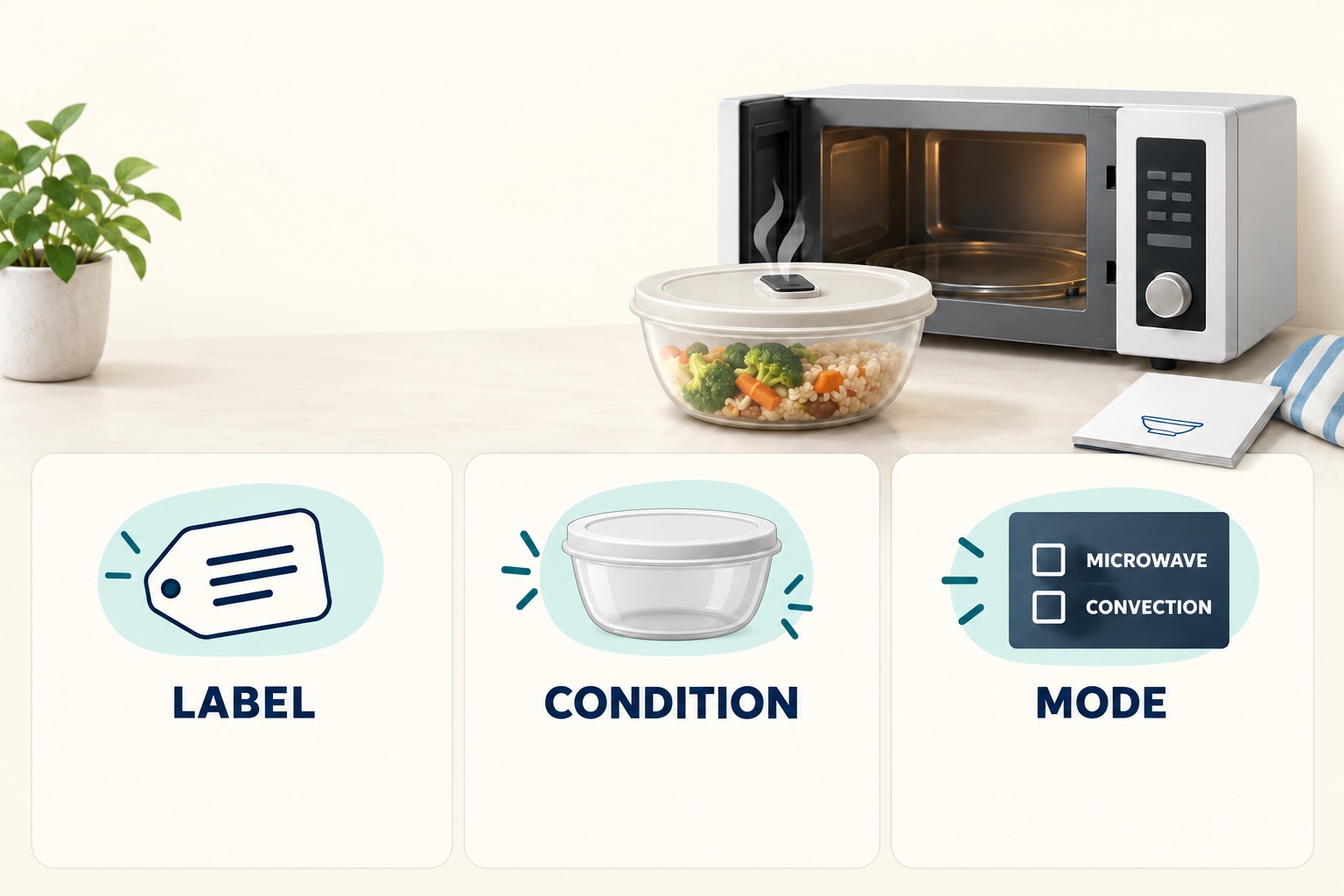
A three-question decision checklist
| Question | What to establish | If you cannot establish it |
|---|---|---|
| Label | The maker permits this exact use, including time, food and lid restrictions | Choose another clearly approved container |
| Condition | No cracks, warping, damaged parts or conflicting decoration | Do not continue using it for heating |
| Mode | Instructions cover the selected microwave, convection, grill or combination mode | Stop and check the model manual |
Record the actual wording or photograph the packaging. A remembered purchase description such as “kitchen-safe bowl” is not enough to decide which mode or temperature it tolerates. If markings have worn away and the maker cannot confirm the use, replacement is a better decision than experimenting.
Material alone does not complete the check
The FDA’s microwave guidance advises following the oven’s instructions and using suitable cookware; metal generally reflects microwaves. Any permitted metal accessories or foil uses must come from the exact appliance and food instructions, not a generic internet rule. A supplied accessory is not evidence that any similar metal tray is acceptable.
USDA packaging guidance warns against heating food in cold-storage tubs such as margarine and cottage-cheese cartons, which are not intended for that use. Reusable-looking packaging is not necessarily reusable cookware. Use clearly approved cookware instead.
For single-use food packaging, read the heating directions and follow the intended use rather than transferring that permission to another package. Remove metal twist ties and do not substitute newspaper or ordinary grocery bags. If instructions are missing, transfer food to a suitable known container rather than treating packaging as a test subject.
Match the lid and the cooking mode
A microwave-approved bowl may have a lid with different limits. Read venting and sealing instructions separately. Do not heat a tightly sealed container. Plan where steam will escape and how you will handle the dish without placing your face or hands over that opening.
For a combination appliance, record the selected mode before loading the dish. Convection and grill functions can expose it to hot air or direct radiant heat; microwave approval by itself does not establish oven approval. Conversely, a conventional metal baking pan’s oven rating does not establish microwave suitability. Use only the maker’s expressly permitted combination.
Heating safely is more than choosing the bowl
USDA microwave cooking guidance recommends appropriate covering with venting, stirring or rotating, observing standing time and checking food in several places with a suitable food thermometer. For reheated leftovers, its target is 165°F. Do not leave a thermometer inside while microwaving unless it is specifically approved for that use.
The bowl can become hot from the food even when it is suitable for microwave use. Use appropriate protection and follow the cookware instructions. Container approval is not proof that the center of a meal reached a safe temperature, nor does standing time replace the food-temperature check.
Keep container questions separate from an appliance fault
If there are sparks, smoke, unusual odors or visible damage, stop the cycle. Do not keep rerunning an unknown container until it “passes.” If the door, hinge, latch or seal is damaged, stop using the appliance and contact the manufacturer. Do not run the oven empty or remove its outer cover to investigate heating.
If correctly selected cookware does not resolve a heating complaint, use the safe-control checks in our LG microwave not-heating guide or Samsung microwave guide, as applicable. Internal microwave repairs require qualified service; this container checklist cannot diagnose a magnetron or high-voltage component.
A useful record for the next meal
Keep a small list of the container name, lid instructions, permitted modes and source of those instructions. It prevents the recurring mistake of using a familiar bowl in a different appliance mode. Update the list when you replace a lid or notice damage—not simply because the bowl worked once.
Editorial method: TemperatureMaster Editorial prepared this decision aid with AI-assisted research and writing, using FDA and USDA guidance. No containers were laboratory-tested and no universal approval is implied. Sources checked October 4, 2026. See our editorial policy.
