
Direct grilling puts food above the active heat source. Indirect grilling places it away from that source, with the lid enclosing a heated cooking space. Turning every burner down does not create an indirect zone: the position of the food relative to the fire matters as well as the temperature.
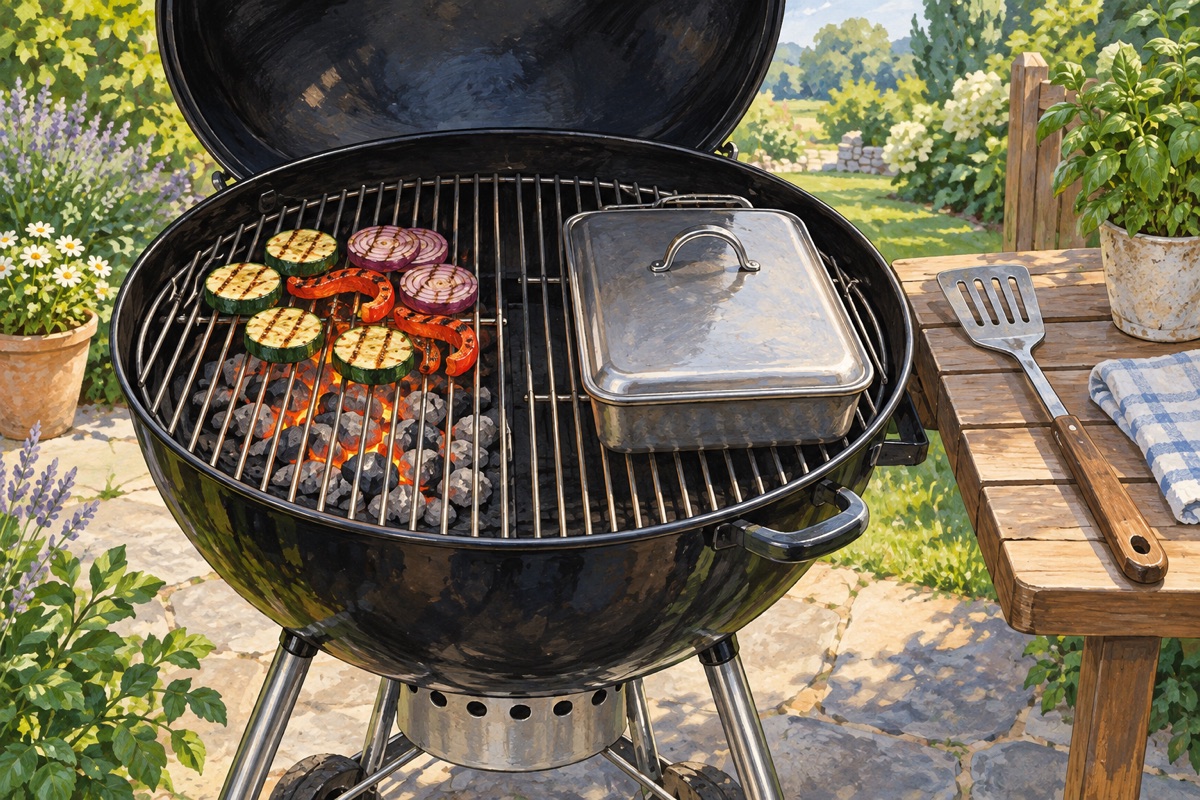
The useful question is not simply “Which method is hotter?” It is “Does this food need rapid surface browning, more time for its center to cook, or both?” A two-zone arrangement gives you somewhere to move food when those needs stop matching.
Start with the result you need
| Cooking problem | Useful approach | What it does not prove |
|---|---|---|
| Thin food needs browning | Direct heat at the recipe’s appropriate intensity | Dark grill marks do not confirm a safe center temperature |
| The outside browns before the center is ready | Move to an established indirect zone and continue the recipe | An unlit area is not cold storage |
| A larger item needs an enclosed roasting environment | Indirect cooking with the specified lid arrangement | Lower burner settings alone do not describe the heat path |
| Different foods finish at different times | Plan their zones and safe holding separately | A cooler zone does not preserve cooked food safely indefinitely |
Weber’s method comparison describes direct, indirect and two-zone cooking. Those are arrangement choices, not three universal temperatures. A recipe’s food thickness, desired finish and equipment still matter.
Map the heat before adding food
With the grill off and cool, identify which burner heats which part of the grate, or where charcoal can sit under the cooking area. Read the manual’s approved indirect setup. A small single-burner grill, an infrared system and a multi-burner gas grill do not necessarily use the same arrangement.
On a compatible gas grill, indirect cooking leaves the burner beneath the food off while another burner supplies heat. On a compatible charcoal grill, the food sits over an area without burning charcoal directly underneath. Use the manufacturer’s instructions for ignition, fuel quantity, preheating, ventilation and suitable pans. Do not block vents or cover the whole cooking surface with improvised foil.
Weber’s gas-grill guidance gives examples by burner count. Check that example against your model rather than copying a diagram from a different burner layout. The lid is normally closed for the enclosed indirect cooking described here; the illustration above leaves it open only to make the zone arrangement visible.
A practical two-food plan
Suppose you want browned vegetable slices and a thicker food that must cook through without excessive surface charring. Before lighting, mark the recipe’s direct stage, indirect stage and required food-temperature check in a note. Reserve enough space for the thicker item to sit entirely in its intended zone; a corner hanging over the fire receives different heat.
Begin each food according to its recipe, not according to a shared timer. If browning runs ahead, move the item to the prepared indirect area using suitable utensils. Finish with the prescribed temperature check and any required rest. This is a planning example, not a tested recipe or a promise that both foods finish together.
Do not confuse three temperature readings
A lid gauge measures near its sensor. A suitable grate-level probe measures another location. A food thermometer assesses the food. A useful cooking note names the measurement and location rather than recording only “350 degrees.” Keep instruments within their rated temperature limits and away from direct flame as their instructions require.
Use the official food-temperature chart for the food being cooked. Poultry needs 165°F (74°C); whole beef, pork, lamb and veal steaks or roasts need 145°F (63°C) followed by a three-minute rest. Ground meats have different requirements. Color and time alone are not substitutes.
When the problem is the grill, not the method
An indirect side being cooler than the fire side is intentional. A previously reliable grill that cannot reach its normal operating conditions is a separate issue; see our Weber low-heat troubleshooting guide. Stop for gas smells, damaged hoses or abnormal flames. Use outdoor grills only in the locations and clearances permitted by their manuals, never inside a house or garage.
Editorial method and limits
TemperatureMaster Editorial prepared this research-based guide with AI-assisted research and writing checked against the primary publications linked in the text. Examples and planning aids are editorial constructions, not results from hands-on testing or a professional inspection. The illustration is AI-generated. See our editorial policy.
